What Science Says About Our Dating Preferences And Tendencies
August 12, 2026 by Justin Lehmiller
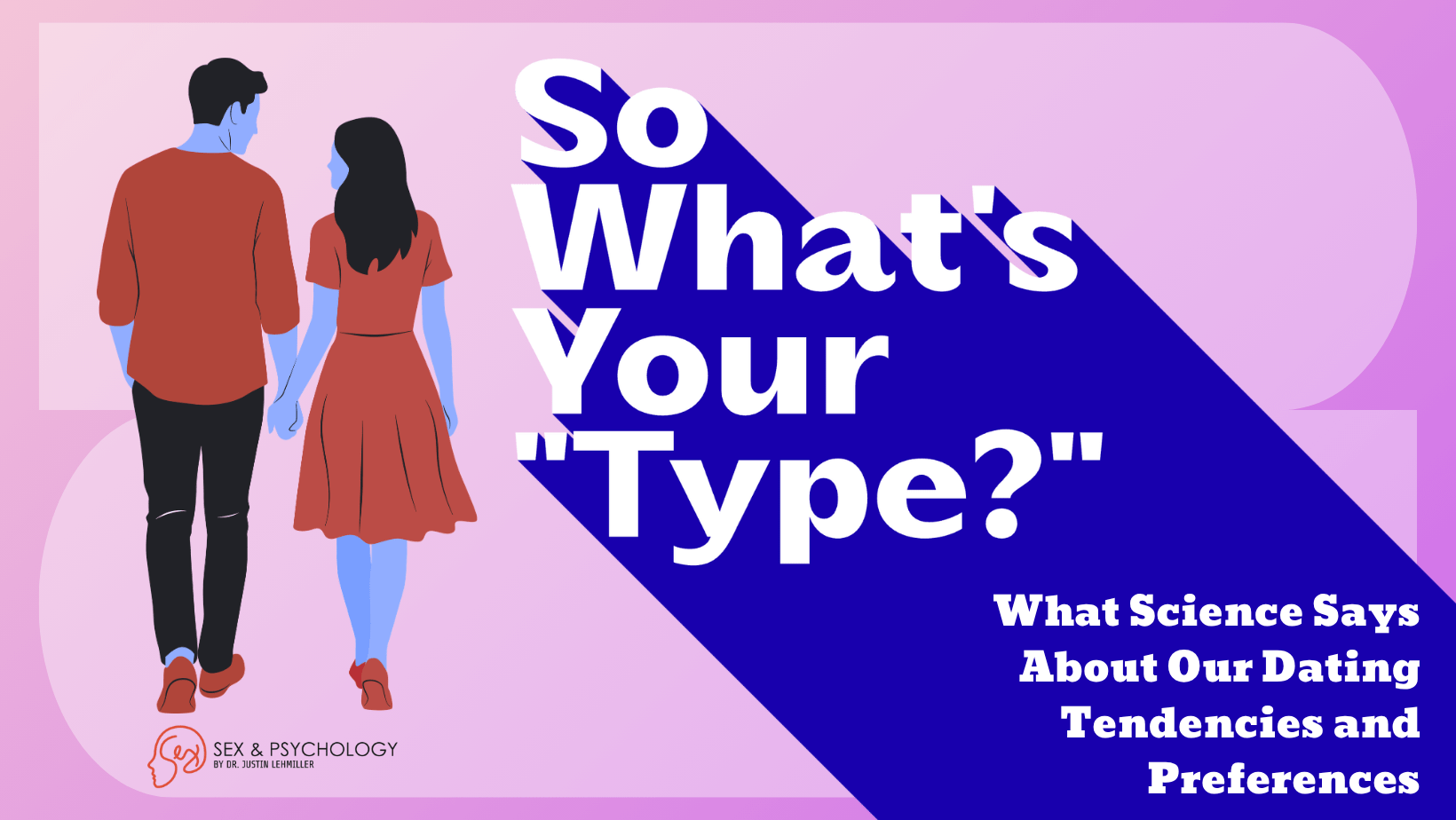
Think about your exes for a moment. Do they all seem completely different to you, or do they share certain traits?
The idea that people have a romantic “type” is deeply embedded in popular culture, but just how much commonality exists in the partners we select? In this post, we’ll explore what the research says.
Do We Choose Partners With Similar Personalities?
In a study published in the Proceedings of the National Academy of Sciences, researchers at the University of Toronto analyzed data from a nine-year longitudinal study that involved a nationally representative sample of Germans. However, they only focused on the responses of the 332 adults (159 men and 173 women) who had different romantic partners at different points in time over that nine-year term.
Each individual—and each of their partners—were asked to complete the Big Five personality inventory, which assessed their standing on the traits of openness to experience, conscientiousness, agreeableness, extraversion, and neuroticism.
Researchers then looked to see whether the responses of people’s partners overlapped, and they did. In other words, people’s exes and current partners tended to have similar personality profiles.
It’s important to note that people’s own personality traits were also related to those of their partners. In other words, people tended to select partners who were similar to them. However, similarity between partners existed above and beyond similarity to the self. In other words, what we’re seeing here is indeed evidence that people are going for a certain “type,” as opposed to simply seeking out a like-minded partner.
That said, it’s worth mentioning that some personality traits were linked to having less consistency in one’s chosen partners. Specifically, those who were more extraverted (meaning they are outgoing and sociable) and those who were open to new experiences (meaning they like to try new and different things) didn’t seem to have as strong of a type. This makes sense because extraverts are likely to meet a wider range of people due to their outgoing nature, while those high in openness are just more willing to experiment and explore in general.
Do Our Romantic Partners Tend to Look Alike?
One limitation of the preceding research is that it only considered whether people tend to seek out a certain personality type. Do we tend to have a physical type as well?
A study published in the Journal of Personality and Social Psychology considered the extent to which people’s previous partners “clustered” in terms of certain physical traits, such as attractiveness and masculinity. The results of this research revealed that people’s past partners were more similar to one another in their physical traits than would be expected by chance.
Together, these two sets of findings suggest that people tend to have both physical and personality types they seek out in their romantic partners.
Implications
We need more research to know whether this tendency toward having a romantic type ultimately has positive or negative implications. On the one hand, knowing your type could help streamline the dating selection process, increasing the likelihood of pursuing relationships with the people who are most compatible with our preferences. But on the other hand, having a strong type could potentially narrow our dating pools in ways that don’t serve us well. For example, we might end up overlooking partners who possess desirable qualities simply because they don’t fit our typical mold. We need more research to better understand when having a type helps and when it holds us back.
That said, there are important implications of this line of work. One of the big ones is that our romantic choices may be more predictable than they appear at first glance. While we often think of attraction as spontaneous and unpredictable, the evidence suggests that we tend to gravitate to people with certain profiles.
This insight might prove useful in the world of online dating and matchmaking. Understanding the kinds of traits people have consistently been attracted to in the past (and the traits their previous partners have had in common) could potentially improve the quality of recommended matches. Whether that will ultimately lead to stronger relationships is an open question, but the existing evidence suggests that our dating pasts may contain important clues about our future romantic choices.
If you have a sex question of your own, record a voicemail at speakpipe.com/sexandpsychology to have it answered on the blog or the podcast.
Want to learn more about Sex and Psychology? Click here for more from the blog or here to listen to the podcast. Follow Sex and Psychology on Facebook, Twitter (@JustinLehmiller), Bluesky, or Reddit to receive updates. You can also follow Dr. Lehmiller on YouTube and Instagram.
Image made in Canva.
References
Eastwick, P. W., Harden, K. P., Shukusky, J. A., Morgan, T. A., & Joel, S. (2017). Consistency and inconsistency among romantic partners over time. Journal of Personality and Social Psychology, 112(6), 838.
Park, Y., & MacDonald, G. (2019). Consistency between individuals’ past and current romantic partners’ own reports of their personalities. Proceedings of the National Academy of Sciences, 116(26), 12793-12797.

Dr. Justin Lehmiller
Founder & Owner of Sex and PsychologyDr. Justin Lehmiller is a social psychologist and Research Fellow at The Kinsey Institute. He runs the Sex and Psychology blog and podcast and is author of the popular book Tell Me What You Want. Dr. Lehmiller is an award-winning educator, and a prolific researcher who has published more than 50 academic works.
Read full bio >