What Are The Benefits of Sexting?
July 2, 2026 by Merissa Prine-Munroe
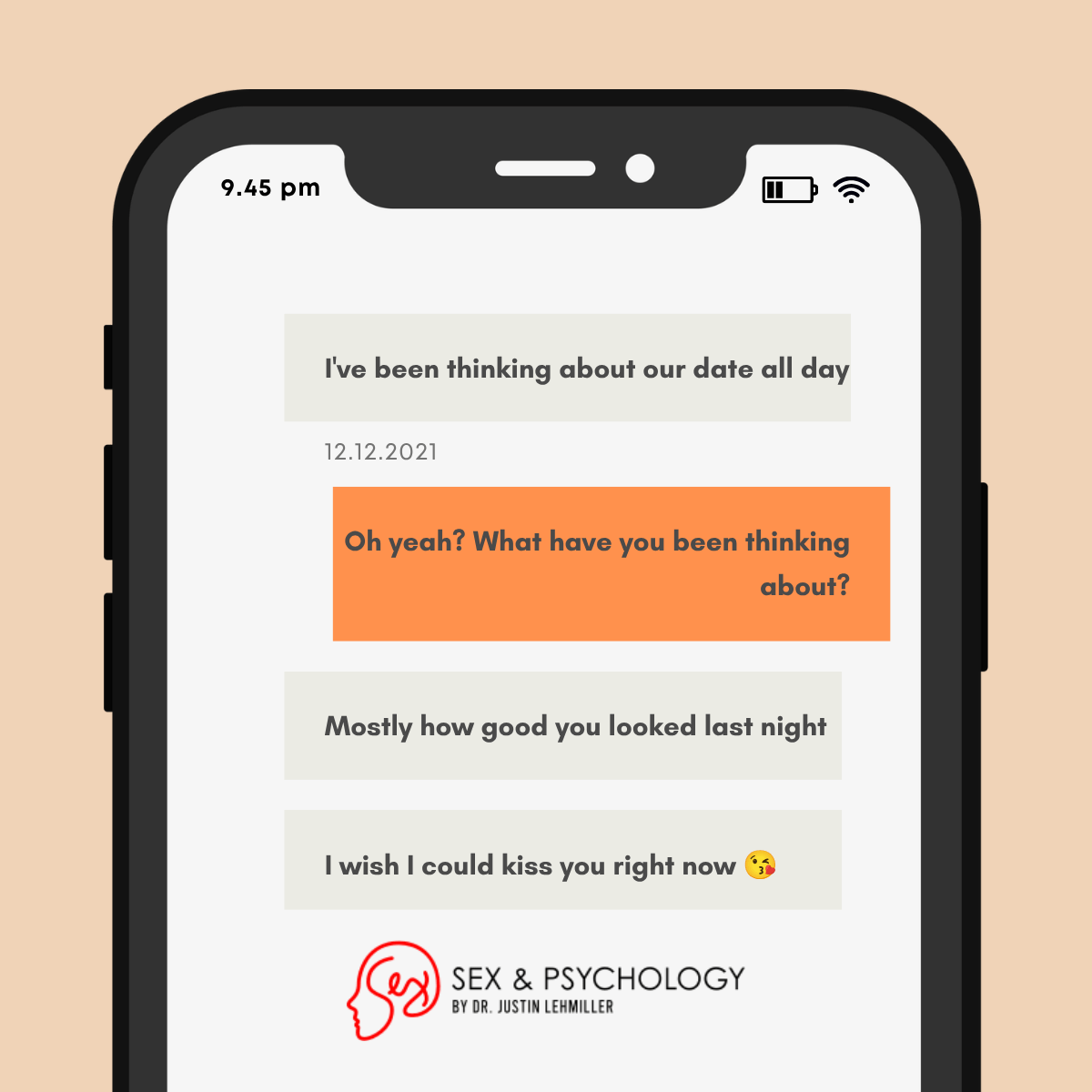
Sexting has become a routine part of many people’s intimate lives. While the term once referred primarily to sexually explicit text messages, technological advancements have led sexting to encompass everything from flirty emojis and voice notes to photos and videos. In fact, some estimates suggest that more than 80% of American adults have sexted within the past year.
Much of the research on sexting has focused on its potential downsides, including concerns about privacy, data security, and consent. Yet despite these well-publicized risks, sexting remains remarkably common. So why is that? The most likely answer is that people are experiencing meaningful rewards from the behavior. So what does the research say about the benefits of sexting?
A recent scoping review of 70 scientific papers published in Computers in Human Behavior explored what we know about the benefits of consensual sexting and why people choose to sext (Dijck et al., 2025). This review of the literature highlighted three overarching themes: 1) individual benefits of sexting, 2) benefits from the reaction of the partner, and 3) relationship benefits. Below, we review each of these benefits separately.
Individual Benefits
Many studies have highlighted the value of sexting from the standpoint of each individual involved in the interaction. Findings suggest that it offers opportunities for sexual exploration and experimentation, such as exploring one’s sexual fantasies.
In addition, sexting is often experienced as sexually pleasurable and arousing in and of itself, and it is frequently used as a way to communicate desire and/or to initiate a physical sexual interaction. Many individuals describe sexting as fun and exciting and, for some, the behavior is also be accompanied by masturbation, further enhancing sexual gratification.
Benefits of Partner Reactions to Sexting
Another category of benefits stems from the way a partner reacts to one’s sexts. For instance, people may experience improved body image and sexual self-confidence or feel validated as a result of receiving favorable partner reactions. When sexting leads to positive feedback and attention, that can make people feel attractive, desirable, and sexy.
Relationship Benefits of Sexting
The final overarching theme identified in the review of literature was that sexting can have relational benefits. For example, there is evidence that sexting is associated with greater sexual satisfaction. Sexting offers a form of sexual communication where partners can learn about each other’s sexual wants, desires, and fantasies. When it comes to sexual communication, people often find it easier to express vulnerability online than in person because some things are simply difficult to say out loud.
Additionally, in scenarios where partners cannot physically be together (e.g., when one partner is traveling or a couple is involved in a long-distance relationship), sexting offers an avenue for sustaining sexual connection and intimacy.
Of course, sexting may be experienced somewhat differently depending on the dynamic of the couple. For instance, it can be seen as flirtatious, as a form of foreplay, or as its own sexual practice. That said, given the vulnerability and trust required in sexting, it’s not surprising that it often brings partners closer together.
Taken together, this body of research suggests that sexting is a more nuanced behavior than it is often portrayed to be. Although it carries real risks that warrant careful attention, according to the study’s authors, consensual sexting can also be a “positive element in one’s life” (p. 2) that serves important relational and sexual functions. Future research and public discussions alike should move beyond viewing sexting solely through the lens of harm and instead recognize the conditions under which it can contribute positively to people’s intimate lives.
To learn more about sexting, check out our podcast episode Let’s Talk About Sexting.
If you have a sex question of your own, record a voicemail at speakpipe.com/sexandpsychology to have it answered on the blog or the podcast.
Want to learn more about Sex and Psychology? Click here for more from the blog or here to listen to the podcast. Follow Sex and Psychology on Facebook, Twitter (@JustinLehmiller), Bluesky, or Reddit to receive updates. You can also follow Dr. Lehmiller on YouTube and Instagram.
References:
Van Dijck, S., Van den Eynde, S., & Enzlin, P. (2025). The bright side of sexting: A scoping review on its benefits. Computers in Human Behavior, 164, Article 108499. https://doi.org/10.1016/j.chb.2024.108499
Banner made in Canva

Dr. Justin Lehmiller
Founder & Owner of Sex and PsychologyDr. Justin Lehmiller is a social psychologist and Research Fellow at The Kinsey Institute. He runs the Sex and Psychology blog and podcast and is author of the popular book Tell Me What You Want. Dr. Lehmiller is an award-winning educator, and a prolific researcher who has published more than 50 academic works.
Read full bio >