Intimacy and Dating in Older Adults
March 25, 2026 by Merissa Prine
People tend to think of sex as something that declines–or even disappears entirely–with age. And while it’s true that the likelihood of experiencing sexual problems increases as people get older, research shows that sex doesn’t vanish at a certain age, with large numbers of seniors remaining sexually active into their 70s and beyond. Nonetheless, the “sexless senior” stereotype remains widespread, which may even lead some older adults to internalize the idea that they should no longer see themselves as sexual beings. This raises an important question: how do older adults see the role of sexuality in their lives? How much significance do they attach to sex?
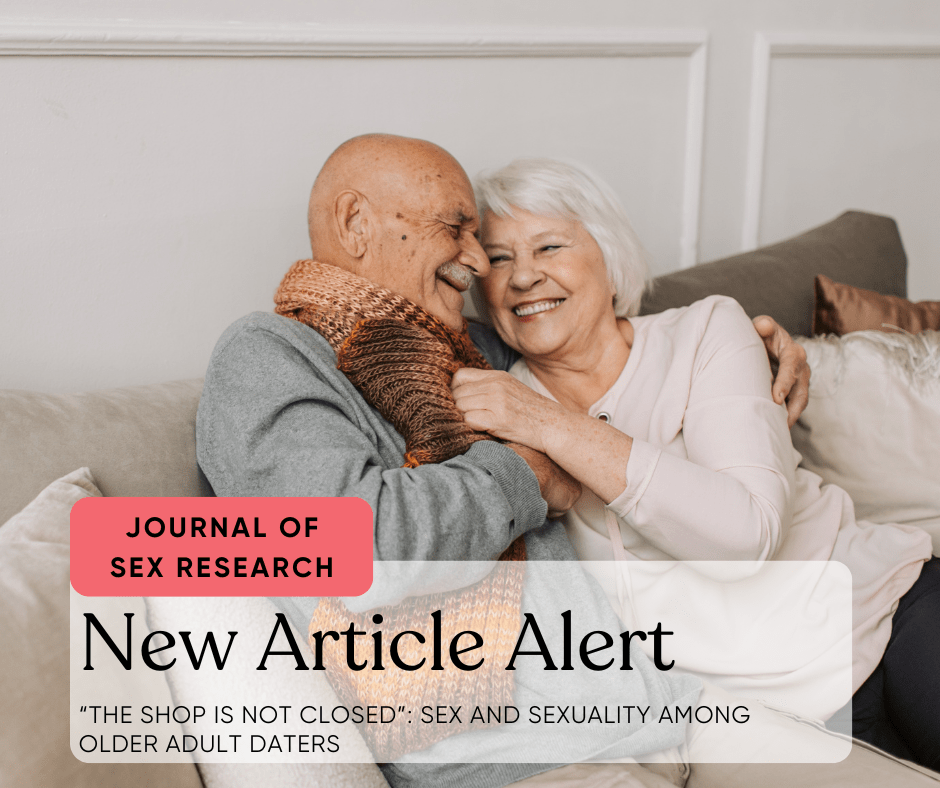
A recent article published in the Journal of Sex Research by Harris and Melanson (2025) explored this topic. The researchers interviewed 100 single older adults between the ages of 60 to 82 to explore the role of sexuality in their dating experiences. Specifically, older adults were asked how important sex was for a relationship, how they felt about sex with someone new, and a variety of other questions about dating and relationships. We will highlight three key themes the researchers identified from their interviews below.
Sex is Still a Part of Romantic Relationships
Most older adults (72%) explained that sex was an integral part of a romantic relationship, often considering a relationship without sex to be a “dealbreaker.” Although some of the participants interviewed were open to other forms of sexual activity (e.g., mutual masturbation or oral sex) to fill this gap, most felt that romantic relationships should include some type of sexual component. More broadly, sex was described as an expected part of intimacy within romantic relationships, which aligns with previous studies on the topic.
Bodies Change With Age
The adults interviewed acknowledged that bodies change across the lifespan and that biological barriers to sex may arise with aging (e.g., difficulties with lubrication or erectile dysfunction). However, these challenges were generally seen as minor and did not appear to diminish their overall desire for partnered sexual activity. In most cases, participants expressed acceptance of these changes and described various ways of maintaining pleasure with their partners (e.g., lubricants, medications, hormone replacement, etc.), reflecting a willingness to adapt rather than withdraw from sexual intimacy.
Sex Looks Different Across the Lifespan
Likewise, older adults generally embraced the idea that their sex lives might look different than it did when they were younger. Although they acknowledged that it might be less frequent than it used to be, they still viewed sex as a desirable feature of romantic relationships. They explained that it remained valuable and pleasurable despite any changes in the type of sex they were having or the frequency with which it occurred.
Is Sex Important in the Dating Lives of Older Adults?
Overall, the results of this study refute the “sexless senior” stereotype and show that sex remains an important part of romantic relationships as people age. As Harris and Melanson (2025) explain in their article, older adults recognize that sex may look different with age but still view it as meaningful. In fact, sex may be particularly beneficial later in life, as it has been linked to a range of positive physical and mental health outcomes, including reduced stress, better memory performance, and increased longevity. Altogether, this highlights the need to reduce stigma around sexuality in older adulthood and to recognize that sex doesn’t have an expiration date.
If you have a sex question of your own, record a voicemail at speakpipe.com/sexandpsychology to have it answered on the blog or the podcast.
Want to learn more about Sex and Psychology? Click here for more from the blog or here to listen to the podcast. Follow Sex and Psychology on Facebook, Twitter (@JustinLehmiller), Bluesky, or Reddit to receive updates. You can also follow Dr. Lehmiller on YouTube and Instagram.
Image made in Canva
References:
Harris, L., & Melanson, C. (2026). “The shop is not closed”: Sex and sexuality among older adult daters. The Journal of Sex Research, 1–13. https://doi.org/10.1080/00224499.2026.2614315

Dr. Justin Lehmiller
Founder & Owner of Sex and PsychologyDr. Justin Lehmiller is a social psychologist and Research Fellow at The Kinsey Institute. He runs the Sex and Psychology blog and podcast and is author of the popular book Tell Me What You Want. Dr. Lehmiller is an award-winning educator, and a prolific researcher who has published more than 50 academic works.
Read full bio >