The Psychological Importance of Pride Flags
June 24, 2026 by Emily Mendelson
To celebrate Pride month this year, we’ve covered recent research related to the LGBTQ+ community, recommended books by, about, and for trans people, and discussed what intimacy might look like beyond amatonormativity. In this post, we’re rounding things out with a discussion of the symbolism of Pride flags, including their importance to psychological wellbeing.
The History of the Pride Flag
The original Pride flag was designed by Gilbert Baker, an activist from San Francisco. He was commissioned by the first openly gay elected official in California, Harvey Milk, to create an image of pride for the gay community.
Baker’s original design for the Pride flag was inspired by Judy Garland’s Over the Rainbow, featuring eight colors with each representing something different (e.g., orange for healing). However, two of the colors (turquoise and hot pink) were later removed due to logistical difficulties. The hot pink stripe was removed because the specific fabric color was difficult to obtain, while the turquoise and indigo stripes were combined into a single shade of blue so that the flag was easier from a production and design standpoint and featured an even number of stripes.
How the Pride Flag Evolved
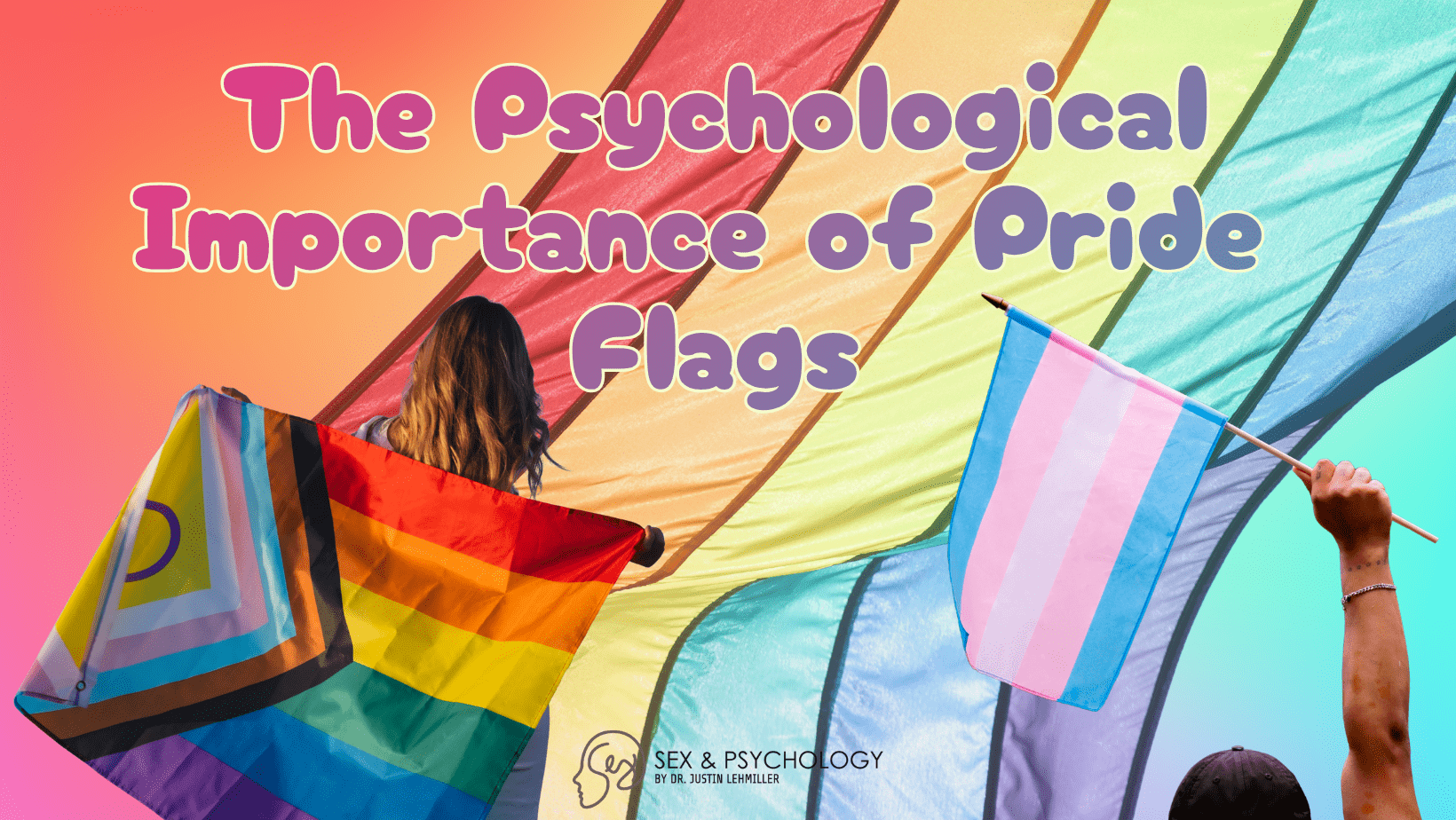
This six-stripe rainbow flag continues to be amended and evolved upon, demonstrating progress and acceptance within the LGBTQ+ community. Notably, the 2017 Philadelphia Pride Flag design added black and brown stripes to the top of the rainbow to represent queer people of color, and the 2018 Progress Pride Flag used this idea to add the chevron stripes to the left of the flag: keeping the black and brown stripes but adding blue, pink, and white to represent marginalized LGBTQ+ communities of colour, those living with HIV/AIDS and those who’ve been lost, as well as trans and non-binary persons.
The most recent evolution to the pride flag came in 2021, with the Intersex-Inclusive Progress Pride Flag. This flag is considered the most widely-expansive umbrella flag for the queer community. It adds a yellow triangle with a purple circle in the middle of the chevron stripes on the Progress Pride Flag and is used ensure intersex people are included in Pride representation.
The evolution of the pride flag in this way demonstrates how identity-specific pride flags are important in representing specific identities under the LGBTQ+ umbrella. For example, the meaning of the blue, pink, and white stripes added to the Progress Pride Flag is easy to interpret because they are already used for the Transgender Pride Flag. Most of these identity-specific flags adopt the same stripe design of the original flag, but change the colors to represent different genders and sexual orientations.
The Psychological Importance of Pride Flags
In general, flags are symbolic items used to represent all sorts of things, such as countries, organizations, and various human causes. The Pride flag is no different: the flag itself acts as a symbolic representation and acknowledgement of the LGBTQ+ community, assumed to reflect one’s own pride in themselves and/or allyship with the queer community.
Psychologically, previous research has found that pride flags are important, especially for queer youth. For example, one study found that “young people use the rainbow to construct meanings related to affiliation and positive feelings about themselves, different communities and their futures” (p. 557, [1]). Specifically, LGBTQ+ youth felt joy when seeing the rainbows on a Pride flag and used the symbol to find community. The symbolism of the Pride flag “helped them actively navigate towards health, emotional and social services as well as supportive individuals such as teachers and counsellors” (p. 562, [1]).
Of course, there are limits to the Pride flag as a symbol itself. Individuals report assessing the larger contextual environment of where Pride symbols are displayed to better understand the intentions behind it [1, 2]. A different study found that although individuals are grateful that symbols of Pride are displayed, they are also wary of corporate interests when it comes to adopting Pride flags and other queer symbolism. [2] Some are concerned that companies may be displaying Pride symbols inauthentically in order to market towards the queer community while being unsupportive of LGBTQ+ rights overall.
Together, research tells us that Pride flags are an important symbol that demonstrate allyship and support for the LGBTQ+ community and its members. Psychologically, this helps promote positive feelings such as a sense of belonging, especially when these symbols are displayed in public spaces. However, as a symbol, the pride flag can also be co-opted for other purposes, making the context of these displays especially important.
If you have a sex question of your own, record a voicemail at speakpipe.com/sexandpsychology to have it answered on the blog or the podcast.
Want to learn more about Sex and Psychology? Click here for more from the blog or here to listen to the podcast. Follow Sex and Psychology on Facebook, Twitter (@JustinLehmiller), Bluesky, or Reddit to receive updates. You can also follow Dr. Lehmiller on YouTube and Instagram.
Image made in Canva.
References
[1] Wolowic, J. M., Heston, L. V., Saewyc, E. M., Porta, C., & Eisenberg, M. E. (2017). Chasing the rainbow: Lesbian, gay, bisexual, transgender and queer youth and pride semiotics. Culture, Health & Sexuality, 19(5), 557–571.
[2] Kruk, M., Todd, E., Sullivan, J. T., & Matsick, J. L. (2026). Pride or profit: Assessing the authenticity of the pride flag as an identity safety cue for LGBTQ+ americans. Journal of Social Issues, 82(2), e70062. https://doi.org/10.1111/josi.70062

Dr. Justin Lehmiller
Founder & Owner of Sex and PsychologyDr. Justin Lehmiller is a social psychologist and Research Fellow at The Kinsey Institute. He runs the Sex and Psychology blog and podcast and is author of the popular book Tell Me What You Want. Dr. Lehmiller is an award-winning educator, and a prolific researcher who has published more than 50 academic works.
Read full bio >